ODL Full Form: Open and Distance Learning Explained
8 min read listen • Voice narration
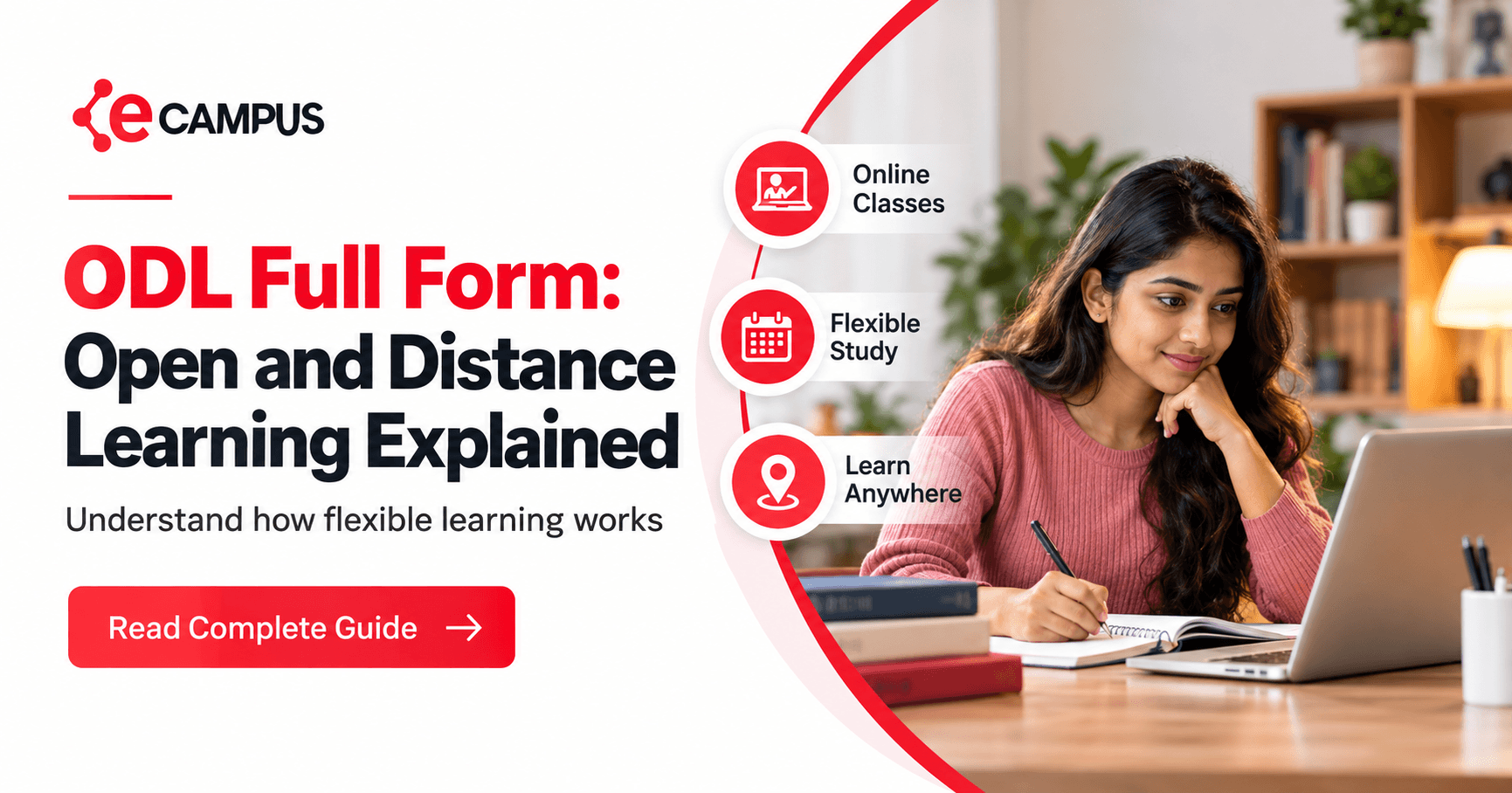
ODL stands for Open and Distance Learning. It is an educational system that allows students to pursue courses and degrees without attending regular classroom sessions every day. This learning mode is suitable for working professionals, students who cannot relocate for education, homemakers, and learners who need flexibility in their study schedules.
In India, Open and Distance Learning has become an important option for pursuing undergraduate degrees, postgraduate degrees, diplomas, and selected certificate programmes. Students can access study materials through printed books, digital platforms, recorded lectures, and other learning resources provided by their university.
Before choosing an ODL programme, students should understand its meaning, benefits, eligibility requirements, recognition, and differences from online education.
What Is the Full Form of ODL?
The full form of ODL is Open and Distance Learning.
It is a mode of education in which teaching and learning take place without requiring students and teachers to be physically present together for regular classroom instruction. Universities may use printed materials, digital resources, online sessions, assignments, learner support centres, and other approved methods to deliver education.
The term includes two related ideas:
Open Learning: Provides flexibility in how learners access education, subject to the programme's admission and academic requirements.
Distance Learning: Allows students to study while being geographically separated from their teachers, using suitable learning resources and communication methods.
ODL programmes can help learners continue their education while managing employment, family responsibilities, or other commitments.
How Does Open and Distance Learning Work?
ODL programmes generally follow a structured academic system. Students enrol in an eligible programme, receive learning materials, complete assignments or other assessments, and appear for examinations according to university rules.
The exact learning process depends on the university and course.
1. Admission and Enrolment
Students select a programme and apply to a university offering it through the ODL mode. Admission depends on the course's eligibility criteria and the university's application process.
2. Study Materials
Learners receive course materials in printed or digital formats, depending on the programme. These resources help students study independently and prepare for assessments.
3. Academic Support
Some universities provide counselling sessions, academic guidance, learner support centres, online resources, or other forms of assistance.
4. Assignments and Examinations
Students complete the assessments prescribed by their university. These may include assignments, practical components where applicable, term-end examinations, or other evaluation activities.
5. Degree or Qualification
After completing the programme and meeting the academic requirements, eligible students receive the qualification awarded by the university.
Difference Between ODL and Online Learning
ODL and online learning both offer alternatives to conventional classroom education, but their delivery methods can differ.
Basis | Open and Distance Learning | Online Learning |
|---|---|---|
Full form | Open and Distance Learning | Learning delivered through the internet |
Study materials | May include printed books and digital resources | Primarily digital learning resources |
Learning method | Self-study, printed materials, digital tools, and other approved methods | Online platforms, digital content, and internet-based instruction |
Classroom attendance | Regular physical classroom attendance is generally not required | Regular physical classroom attendance is generally not required |
Academic support | May include study centres and online support | Usually delivered through digital platforms, with other support where provided |
Flexibility | Suitable for independent and flexible study | Suitable for internet-based learning and digital interaction |
The two terms are not interchangeable in every regulatory or academic context. Students should confirm whether a university offers their chosen course specifically in ODL mode or online mode.
Popular Courses Available Through ODL
Students can explore different academic programmes through recognised or eligible ODL institutions, depending on programme availability.
Course | Level | Suitable For |
|---|---|---|
Bachelor of Arts | Undergraduate | Students interested in humanities and social sciences |
Bachelor of Commerce | Undergraduate | Students interested in commerce and accounting |
Bachelor of Business Administration | Undergraduate | Students interested in management and business |
Master of Arts | Postgraduate | Graduates seeking advanced study in humanities or social sciences |
Master of Commerce | Postgraduate | Graduates interested in commerce and finance |
Master of Business Administration | Postgraduate | Eligible graduates seeking management education |
Diploma Programmes | Varies | Learners seeking specialised knowledge or vocational skills |
Not every institution offers all these programmes through ODL. Availability depends on the university and its authorised programme list.
Benefits of Open and Distance Learning
Flexible Study Schedule
ODL allows learners to organise much of their study time around their personal and professional responsibilities. This can be useful for people who cannot attend regular college classes.
Access to Education
Students living far from major educational centres can pursue eligible programmes without relocating to another city.
Suitable for Working Professionals
Employees can continue working while studying, provided they manage their time and meet the course requirements.
Independent Learning
ODL encourages learners to develop self-discipline, time management, and independent study habits.
Multiple Course Options
Depending on the university, students may find undergraduate, postgraduate, diploma, and other eligible programmes.
Reduced Relocation Expenses
Studying from home can reduce accommodation and daily travel expenses. However, students should still consider tuition, examination charges, study materials, and any required travel.
Is an ODL Degree Valid in India?
An ODL degree can be valid in India when it is awarded by a university operating within the applicable regulatory framework and the specific programme meets the relevant recognition requirements.
The University Grants Commission regulates higher education through its applicable rules and the Distance Education Bureau. Students should verify the institution and the exact programme for the academic session in which they intend to enrol.
Recognition for a previous academic year does not automatically establish approval for every later session. Always check the current status before paying admission fees.
Students should also confirm any additional requirements applicable to regulated professions, government recruitment, or further education.
What Is the Eligibility for ODL Courses?
Eligibility depends on the programme and university.
For undergraduate courses, students generally need to complete Class 12 or an equivalent qualification. Postgraduate programmes usually require a relevant bachelor's degree or another qualification accepted by the university.
Some programmes may have additional subject requirements, minimum marks, entrance tests, or other admission conditions.
Before applying, students should review the official prospectus and confirm that the selected programme is available in ODL mode for the relevant academic session.
How to Apply for an ODL Programme
The application process usually involves the following steps:
Choose a course based on your academic background and career goals.
Verify the university's recognition and the programme's ODL status.
Review eligibility requirements and admission dates.
Complete the online or prescribed application form.
Upload the required educational and identity documents.
Pay the applicable admission charges through the authorised payment system.
Track the application and follow the university's enrolment instructions.
Keep your application details and payment confirmation for future reference.
Who Should Choose Open and Distance Learning?
ODL may be a suitable option for working professionals who want to gain additional qualifications, students who need a flexible study arrangement, homemakers returning to education, and learners who cannot attend regular classes.
It may also suit individuals seeking to complete a degree while managing other responsibilities.
However, ODL is not automatically the best option for every learner. Courses that require extensive laboratory work, clinical training, or supervised practical education may have specific restrictions or requirements. Students should check whether their intended programme is permitted in the chosen mode.
Conclusion
ODL stands for Open and Distance Learning. It provides a flexible way for students to pursue eligible academic programmes without attending regular classroom sessions. By using printed materials, digital resources, academic support, and university assessments, learners can work towards their educational goals while managing other responsibilities.
Before taking admission, students should compare the curriculum, learning support, eligibility requirements, and total costs. Most importantly, they should verify the university's recognition and the selected programme's approval for the relevant academic session.
Choosing an appropriate ODL programme can help learners continue their education while building knowledge for further studies and career development.
Frequently Asked Questions
1. What is the full form of ODL?
ODL stands for Open and Distance Learning, a mode of education that allows students to study without attending regular classroom sessions.
2. What is ODL in education?
ODL is an educational system that uses learning materials, academic support, and assessments to deliver education to students who are separated from their teachers by distance.
3. Is ODL the same as online education?
No. ODL may use printed materials, digital resources, and learner support services, while online education primarily uses internet-based platforms for teaching and learning.
4. Is an ODL degree valid in India?
It can be valid when the university and programme satisfy the applicable recognition requirements. Students should verify the programme's status for their admission session.
5. Can working professionals pursue ODL courses?
Yes. ODL is often suitable for working professionals because it offers flexibility in accessing learning materials and organising study time.
6. Which courses are available through ODL?
Depending on the institution, students may find BA, B.Com, BBA, MA, M.Com, MBA, diploma, and other eligible programmes.
7. Is ODL suitable after Class 12?
Yes. Students who have completed Class 12 may apply for eligible undergraduate ODL programmes, subject to the university's admission requirements.
8. What is the difference between distance education and ODL?
Distance education is a broad term for education delivered when learners and teachers are separated. ODL is a commonly used term for a structured approach that provides flexible learning opportunities through different media and support methods.
9. Does ODL require regular college attendance?
Regular classroom attendance is generally not required, but some programmes may include prescribed counselling, practical work, examinations, or other mandatory activities.
10. How can I check whether an ODL course is recognised?
Check the University Grants Commission's Distance Education Bureau records and the university's official admission information for the relevant academic session and programme.